Romualdous Ignatius Zubrzycki
known in Germany as...
Reinhold Subritzky
6 February 1785 - 24 June 1833
Born with a name that no longer exists — Died having created one that would cross the world. A Bricklayer, a soldier. The man where the Subritzky story begins.
His Story
The man who changed his
name, and started everything.
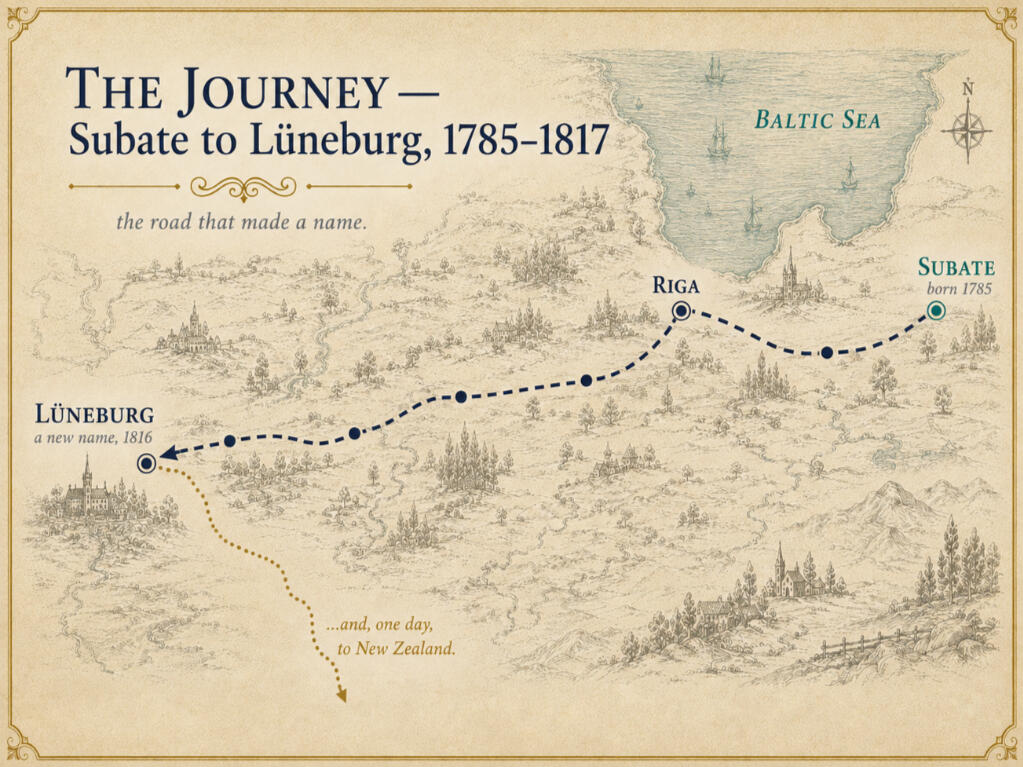
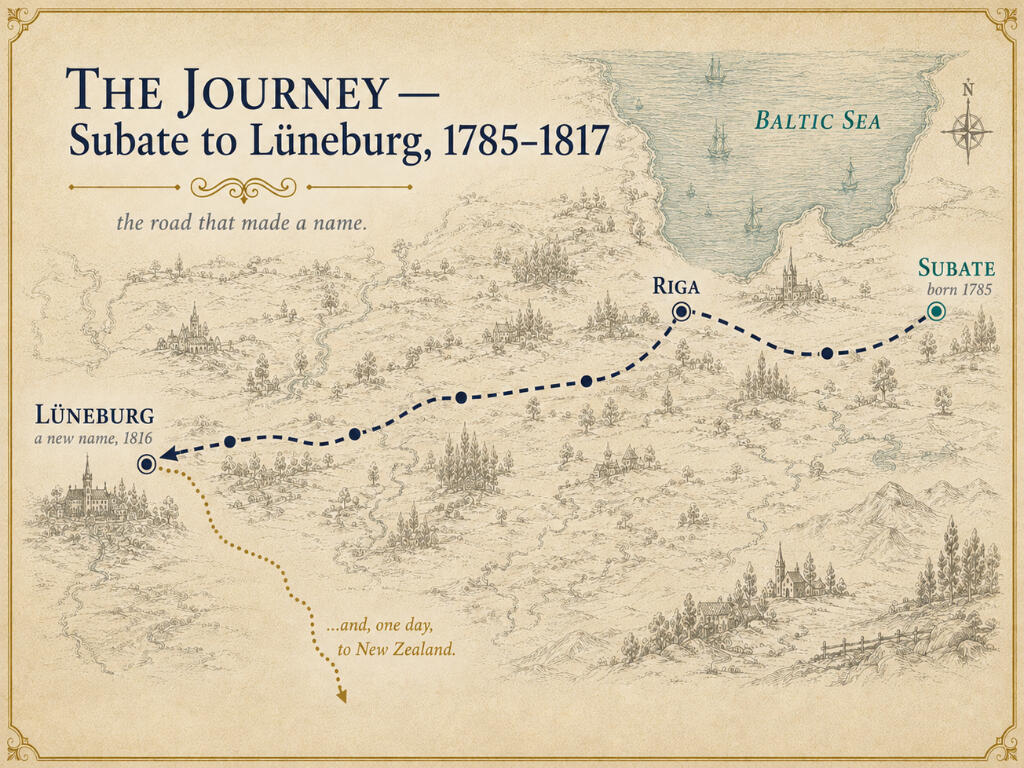
From a village on the Baltic edge of the old Polish world to a German town called Lüneburg — the road that made a name.
The name that started everything
Subocz → Lüneburg · 1785–1833
Every Subritzky alive today carries a name that one man chose. Before him, it did not exist. He was born Romualdous Zubrzycki in the village of Subate — known then as Subocz — on the far eastern edge of the old Polish–Lithuanian world, and somewhere on the road between there and a new life in Germany, he became Reinhold Subritzky.This is the story of the man at the very source of the family: a bricklayer, a soldier, a husband, and the beginning of a name that would one day cross the world to the Far North of New Zealand.

Romualdous's christening record, found in the church at Subate in 2005 — the first proof, on paper, of where the family began. 1
Subocz, 1785
Subocz, Kurland (now Subate, Latvia) · 1785
On 6 February 1785, in the village of Subocz — known today as Subate, in what is now Latvia — a child was christened Romualdous, son of Ignatius Zubrzycki and his wife Christina. His godparents were Isidorus Zubrzycki and Agatha Adamowiczowa.For generations this was only a family story — until, in 2005, Stephen Subritzky travelled to Subate and found the actual christening record in the village church. It was the first hard proof, on paper, of exactly where the family began. His father Ignatius owned land in Subocz and was still recorded there in 1816. Romualdous had a brother, Johanne Anton (known as Jan), and a sister, Catharina.
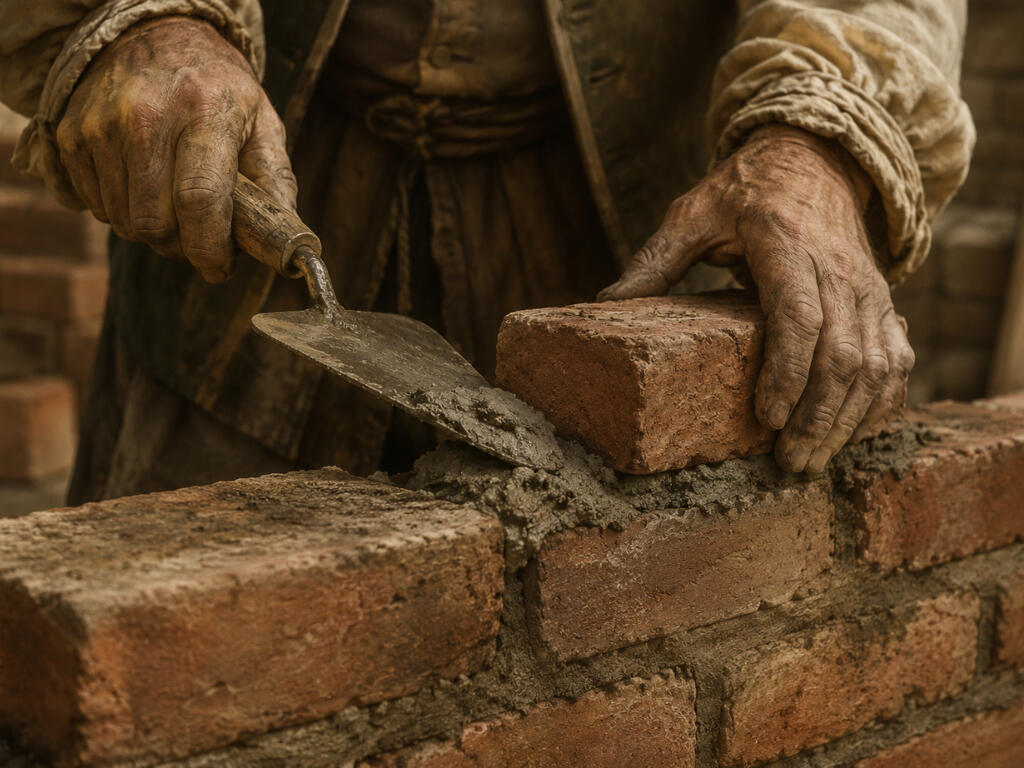
Before any legend of kings and crowns — a young man learning to lay brick and mortar.
The bricklayer
Subocz, Kurland · 1801–1804
From 1801 to 1804, young Romualdous served his apprenticeship as a bricklayer under Master bricklayer Behn, in Subocz, qualifying as a "Fellow Bricklayer." It's a small, human detail that cuts through every grand legend that would later attach to the family: before he was anything else, he was a tradesman who worked with brick and mortar and stone.His apprenticeship papers survived — and years later, in Germany, he would need them urgently for one particular reason: he wanted to marry.
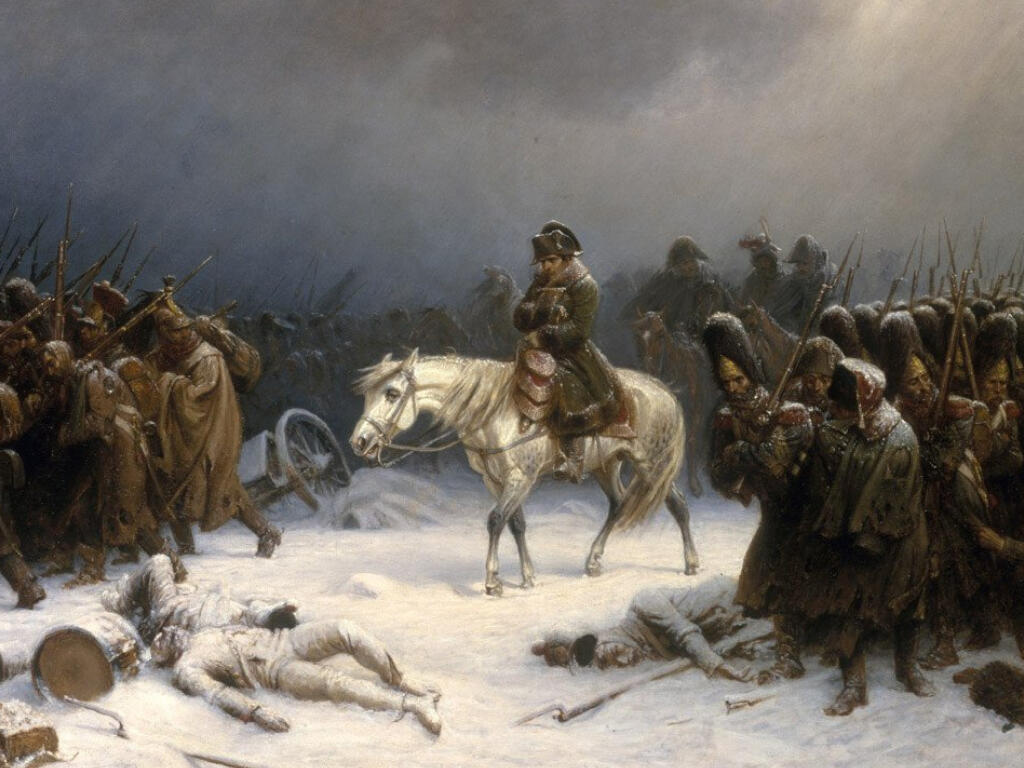
The retreat from Moscow, 1812 — the winter catastrophe that stranded a young bricklayer far from home, and set him on the road to Germany. 2
Napoleon's road
Russia → Hanover · 1812–1816
In 1812, Romualdous and his brother Jan are said to have joined Napoleon's Grande Armée for the disastrous Russian campaign. After the catastrophe at Moscow, the family history holds that the brothers could not return home — and instead struck out west, toward the relative safety of the Kingdom of Hanover.Whatever exactly happened on that long retreat, one thing is certain: it set a bricklayer from the Baltic on the road to a German town called Lüneburg — and to the woman he would marry.
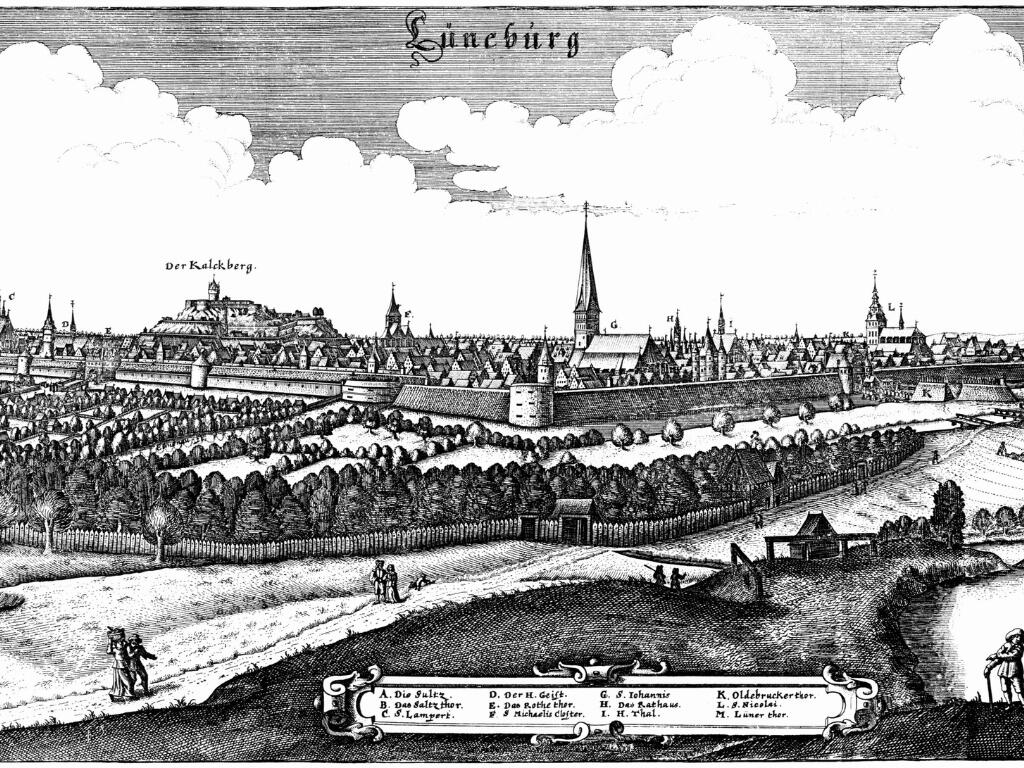
Lüneburg in the 1600s — the walled Hanseatic town, its spires and gates already old, that Reinhold walked into in 1816. 3
A new name in Lüneburg
Lüneburg, Kingdom of Hanover · 1816
Here, in Germany, Romualdous became Reinhold, and Zubrzycki softened into Subritzky — a name that "looked less Polish," as the family always told it. Whatever the reason, the name was new. The family have always said it never existed before him.
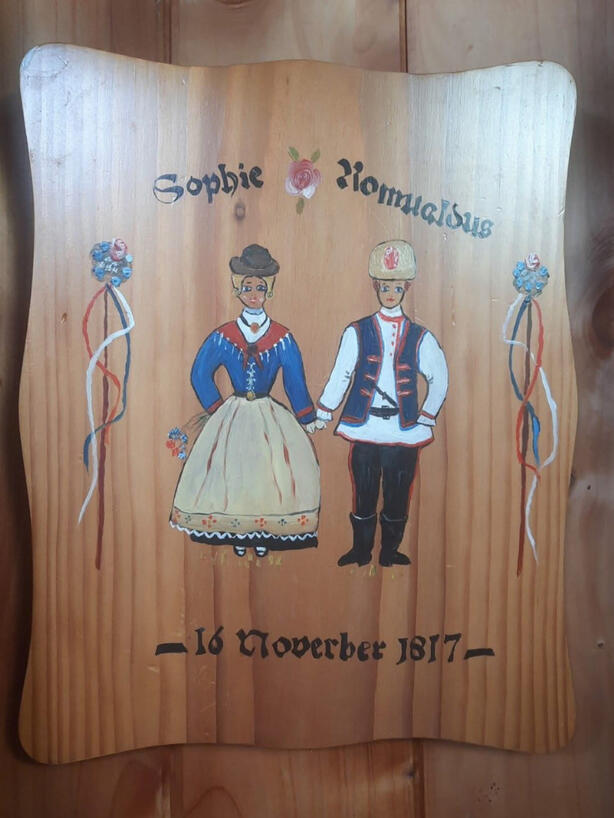
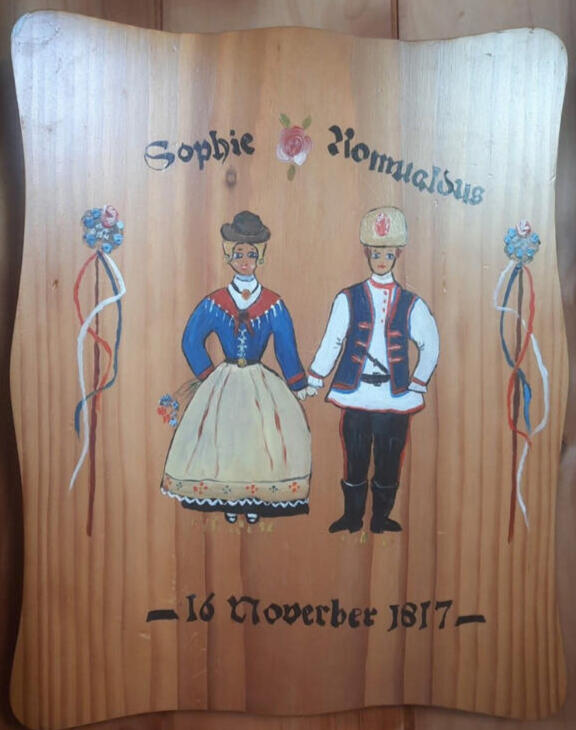
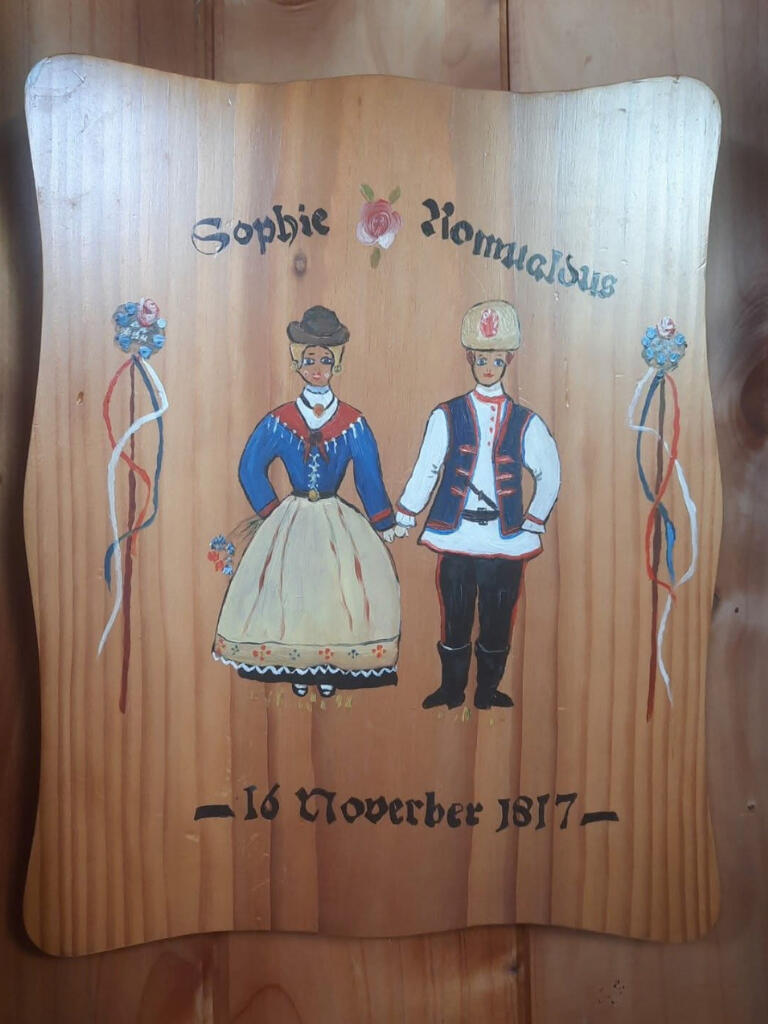
Sophie and Romualdus in traditional dress, hand-painted on their wedding date — 16 November 1817. With no photograph of Reinhold possible, this is the closest the family has to seeing them together. 4
Sophie
St Michaelis Kirche, Lüneburg · 16 November 1817
On 16 November 1817, after the banns were read on two successive Sundays, Reinhold married Sophie Elisabeth Körber at St Michael's Church in Lüneburg — joined together by Pastor Crome. He was 32, a journeyman bricklayer; she was 19, a weaver's daughter from nearby Uelzen who had lost both her parents young. The marriage record still names them both.From this union — a tradesman and an orphaned weaver's daughter, neither with a drop of the royalty the legend would later claim — came the entire family.
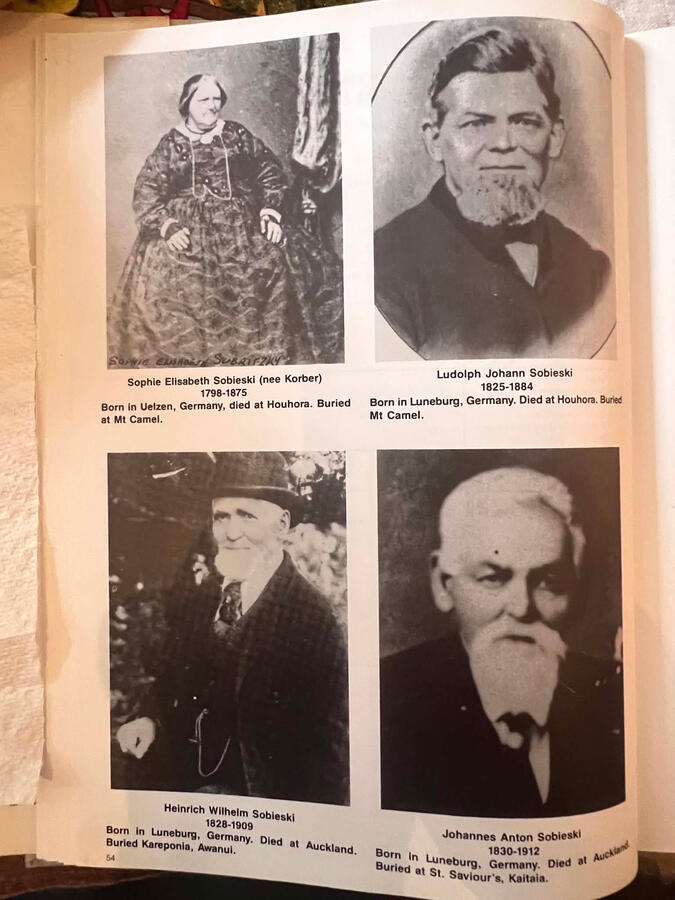
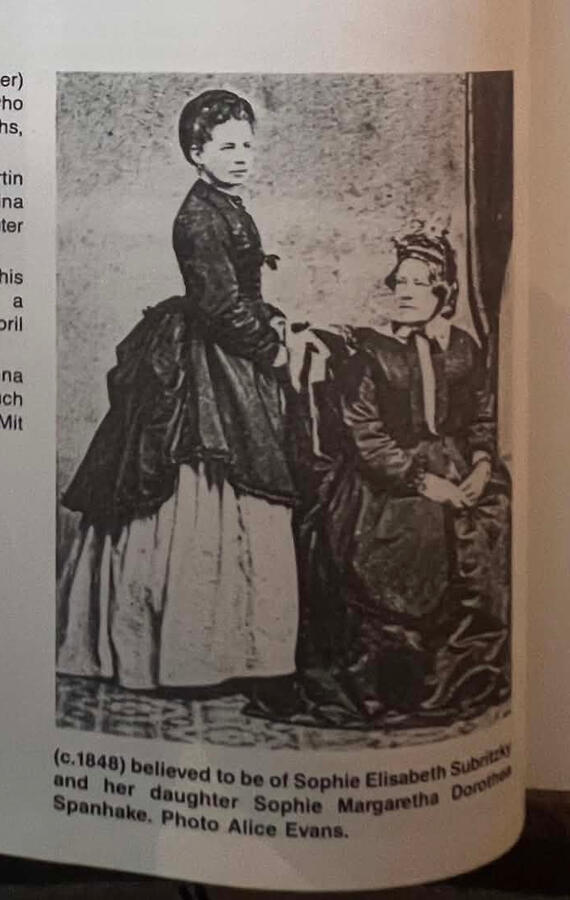
The children who carried Reinhold's name across the world.
Left: his three sons — Ludolph, Heinrich Wilhelm and Johannes Anton — with their mother Sophie (top left), photographed in old age in New Zealand.Right: Sophie with her eldest daughter, Doris, c.1848.Note the surname printed in the old family book: "Sobieski" — recorded under the royal name of the legend, not the bricklayer's name Reinhold actually used. 5
The children who carried the line
Lüneburg, Kingdom of Hanover · 1818–1830
Reinhold and Sophie had a family together in Lüneburg. Four of their children would carry the line across the world, later anglicising their names in New Zealand:
Sophia Margaretha Dorothea ("Doris") — b. 1818 — who would marry Fred Spanhake and join two of our three families.
Ludolph Johann Heinrich ("Louis") — b. 1825.
Heinrich Wilhelm ("Henry") — b. 1828.
Johann Anton — b. 1830.
A small, human detail: when the youngest, Johann Anton, was baptised, his uncle and namesake — Reinhold's brother, Johann Anton "from Riga" — was there to witness it.
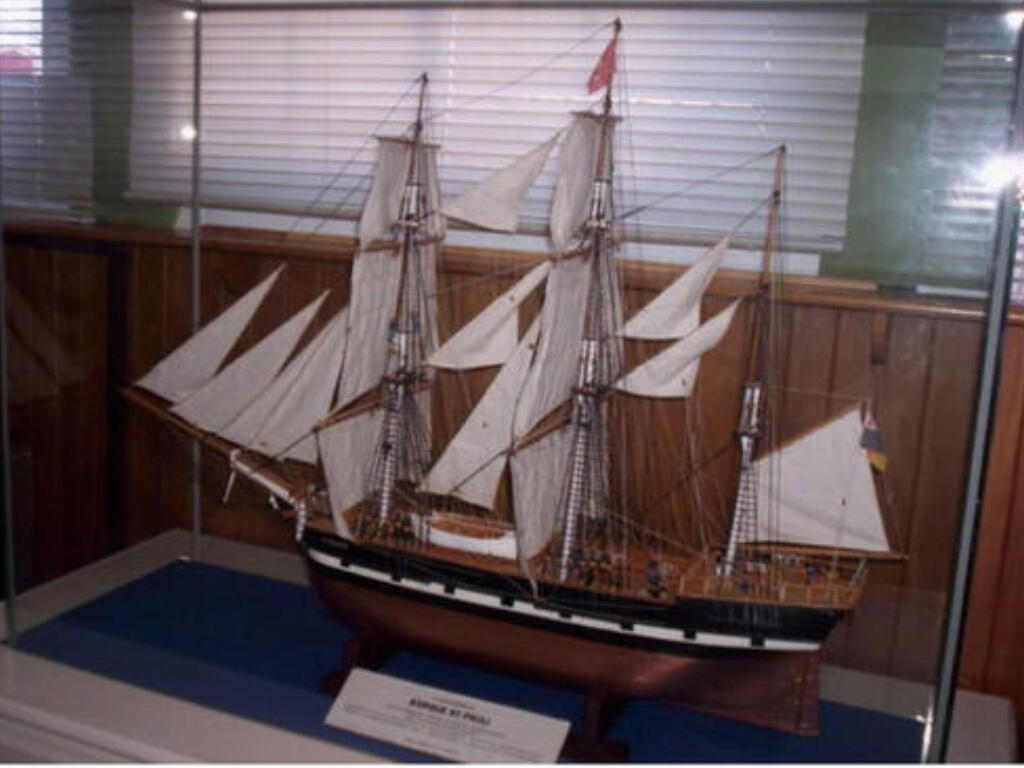
The St Pauli — the ship that carried Sophie and her children to the far side of the world, nine years after Reinhold's death. He never saw it sail. (1/48 scale model, Motueka District Museum.). 6
1833
Lüneburg, Kingdom of Hanover · 24 June 1833
Reinhold died on 24 June 1833 in Lüneburg. He was around 48. Sophie was left a widow at just 35, with young children — and, by the custom of that time and place, her life was considered all but over.It was not. Nine years later she would board the St Pauli and sail for the other side of the earth, and the name Reinhold gave the family would take root in the Far North of New Zealand. He never saw it. But every part of what came after — Nelson, Maldon, Houhora, three families, thousands of descendants — began with him.
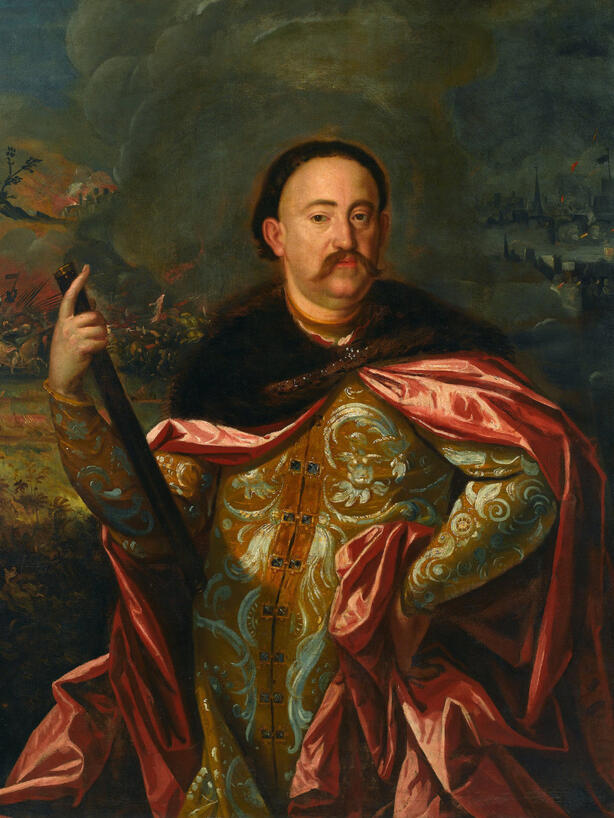
King Jan III Sobieski of Poland (1629–1696) — the monarch the family long believed to be their ancestor. No document has ever proven the link. But the belief, and the name, endured for two hundred years." 7
The Legend
Poland → the Far North · passed down the generations
This is where Reinhold becomes larger than life. For generations the family carried a whispered story: that the name was not really Subritzky at all — it was Sobieski, the royal house of Poland, and that the family "changed it so they could not be found." There were tales of a little red book in which Sophie kept records of a life among royalty — a book said to have been read, laughed at, and destroyed. Of tunnels beneath the Houhora homestead and smuggled treasure. Of the Polish Crown Jewels. Of a Napoleonic painting hanging in the parlour that "clearly depicted a royal occasion."Older still is the documented nobility that sits beneath the royal legend: the Zubrzycki-Kusza line, traced by family historians back through Polish–Lithuanian nobility — and, in the oldest tellings, all the way to the Tartar House of Subotai and the right to bear the Kusza shield, granted in 1495.The paper trail proves a bricklayer from Subate. The legend is the part the family chose to keep alive — and perhaps that is its own kind of truth.
Image credits
2. Napoleon's Retreat from Moscow — painting by Adolph Northen (1828–1876); via Wikimedia Commons, public domain.
3. Lüneburg — engraving by Matthäus Merian the Elder, 17th century; via Wikimedia Commons, public domain.
4. Hand-painted wedding artwork — courtesy of Christian Subritzky, from the collection of Mike Subritzky (artist to be confirmed).
5. Family portraits and the photograph of Sophie and Doris (c.1848, credited to Alice Evans) — from a Subritzky family history publication (source to be confirmed), via John Anderson's Maldon Story archive.
6. The St Pauli — 1/48 scale model by Peta Raggett, Motueka District Museum; from the Subritzky Family History, 1785–1915.
7. Portrait of John III Sobieski — unidentified painter, c.1675–1700; Palace Museum in Wilanów; via Wikimedia Commons, public domain.
All illustrations by Life Moments. Historical images credited individually above.
His Family tree
ARTEFACTS & PLACES
Kurland
Where the name began — and the record that proves it.

The christening record, 1785 — Found by Stephen Subritzky in the church at Subate in 2005: Romualdous, son of Ignatius Zubrzycki, christened the 6th of February. The single document at the root of the whole family.
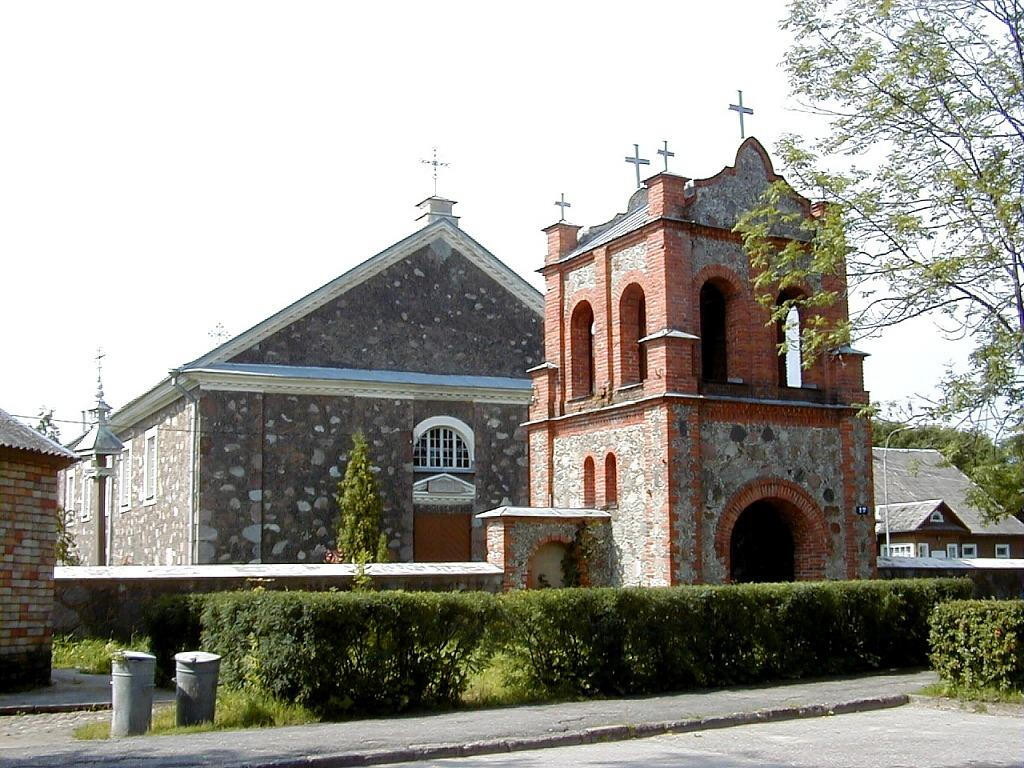
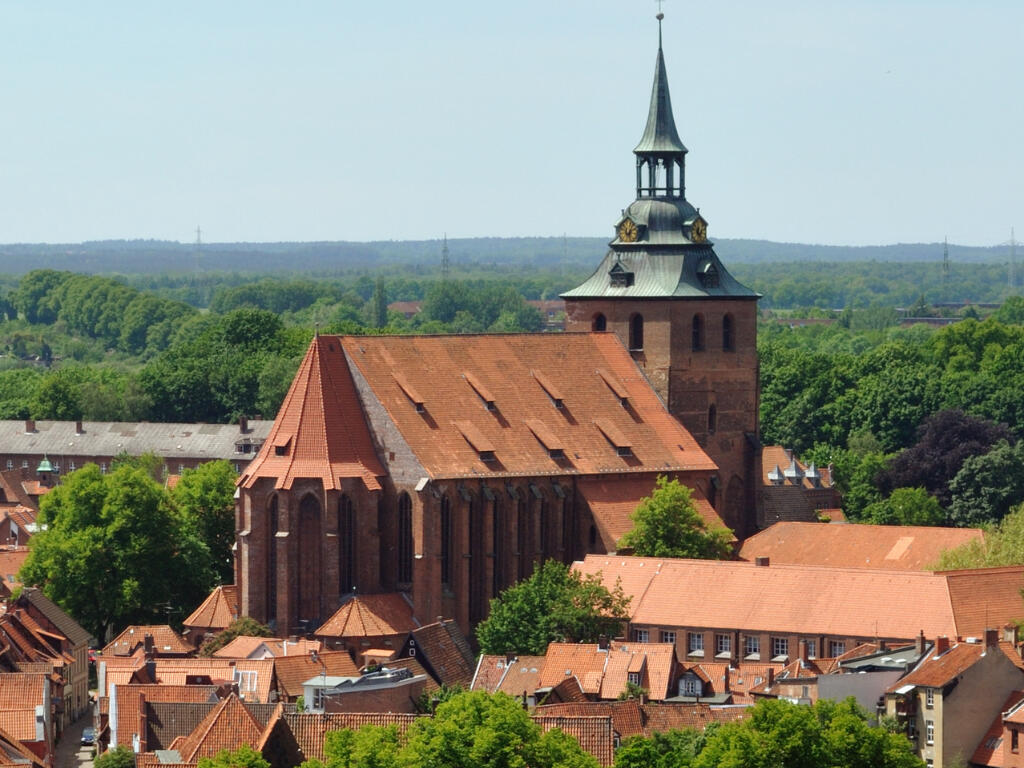
Subate — The fieldstone-and-brick village in Kurland — now Latvia, then the eastern edge of the old Polish world — where Reinhold was born in 1785. This is its Roman Catholic church, standing among the stone houses of the village he came from.
The journey — From Subate to Riga to Lüneburg: the road that carried a bricklayer, and a brand-new name, across a continent.
Lüneburg
Where Romualdous became Reinhold.

The town-archive entry, 1816 — Entry AB1063: "Reinhold Zubritzky from Riga settled as a fellow bricklayer in Lüneburg the 20th July 1816." The first time the new name appears in writing.
St Michaelis, Lüneburg — Where he married Sophie Elisabeth Körber on the 16th of November 1817.
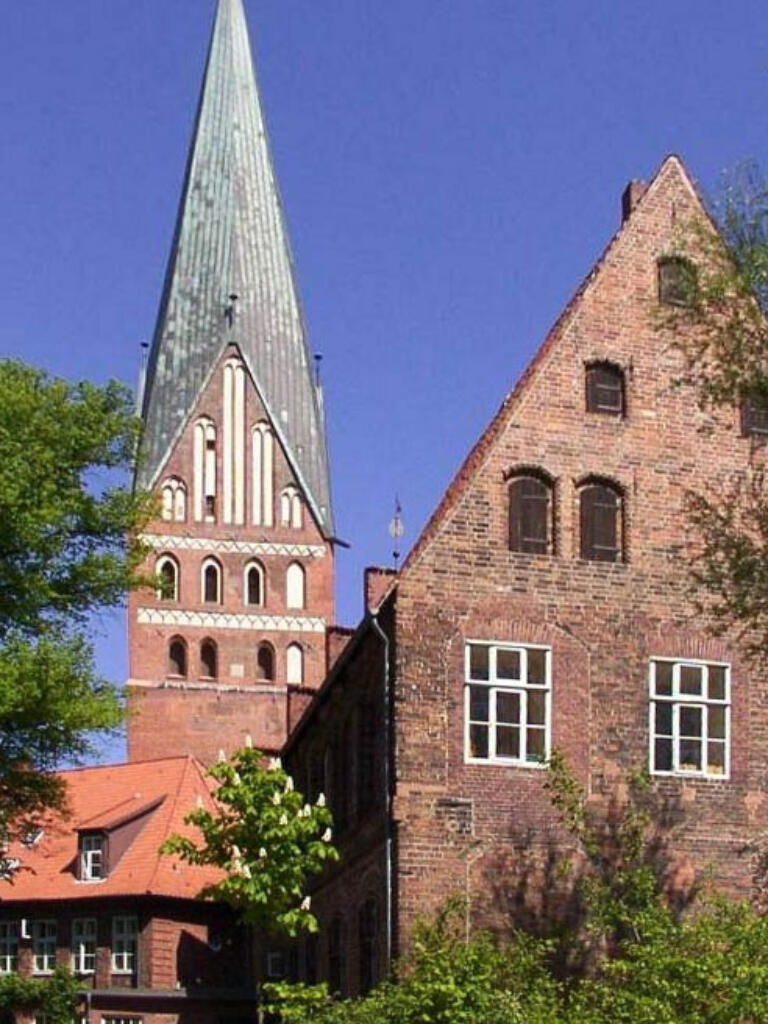
St John's, Lüneburg — Where he was buried on the 24th of June 1833, aged forty-eight.
Sophie & Romualdus, 16 November 1817 — A hand-painted folk artwork of the couple in traditional dress, on their wedding day. With no photograph of Reinhold possible, it is the closest thing that exists to seeing him.
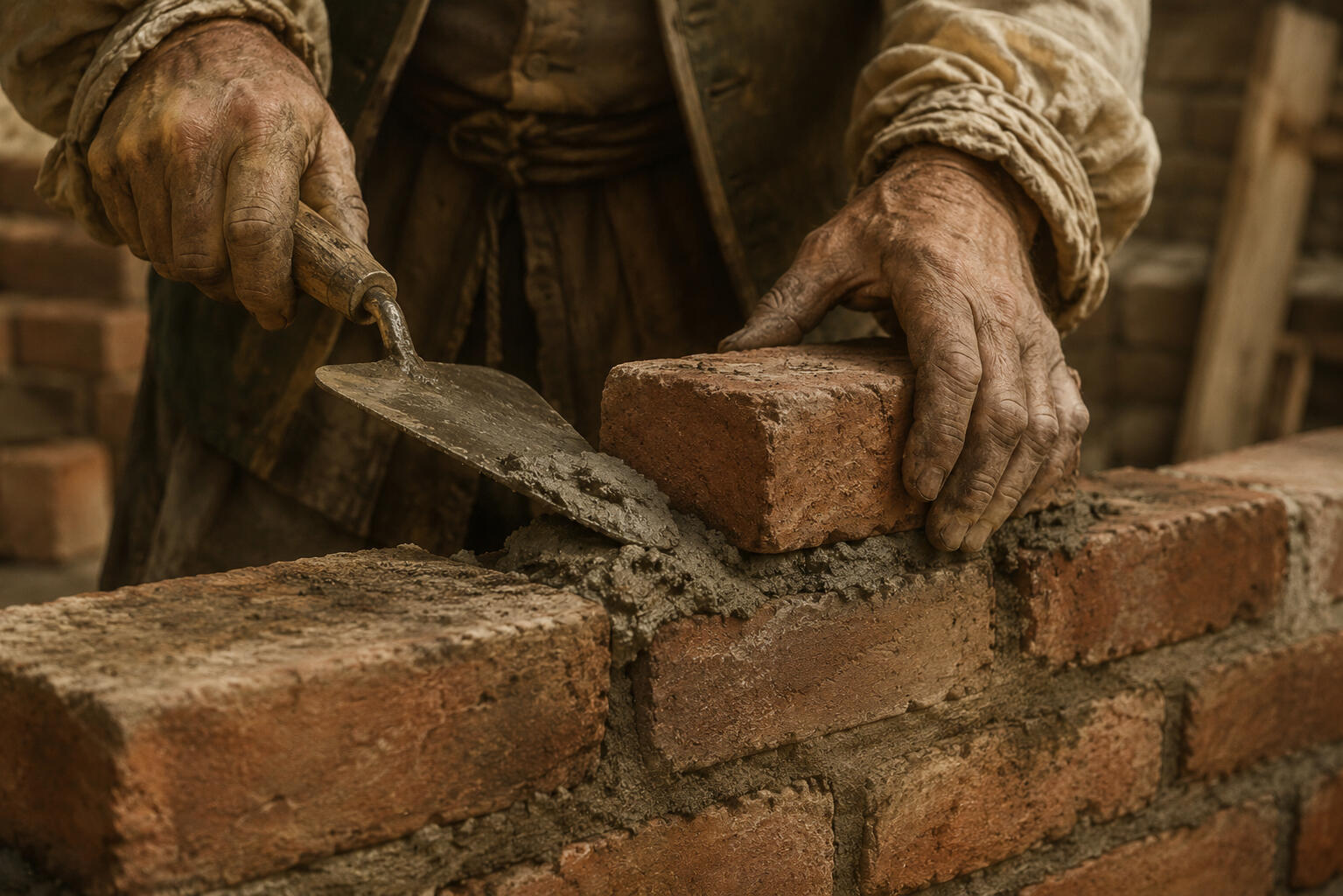
The bricklayer's trade — Apprenticed under Master bricklayer Behn, 1801–1804. Before any legend of crowns, a man who worked in brick, mortar and stone.
Image credits
2. Subate St Michael Roman Catholic Church — photograph by Jānis Sedols, via Wikimedia Commons, CC BY-SA 1.0.
4. St Michaelis, Lüneburg — by DerHexer (own work), via Wikimedia Commons, CC BY-SA 3.0.
5. St John's, Lüneburg — by Unscheinbar (own work), via Wikimedia Commons, CC BY-SA 3.0.
6. Hand-painted wedding artwork — courtesy of Christian Subritzky, from the collection of Mike Subritzky (artist to be confirmed).
All illustrations by Life Moments. Historical images credited individually above.
Celebrating Her Life
Memorial Video
Moments that capture his spirit, humour, and the love he shared.

Zvonko Knez - A Life Remembered
Moments From His Funeral
Moments to be treasured forever.

A Song for Dida

The Haka

Grandsons' Farewell
The Legend
Every family has a story it cannot prove. The Subritzkys' begins with the man who changed his own name.
1. The Crown
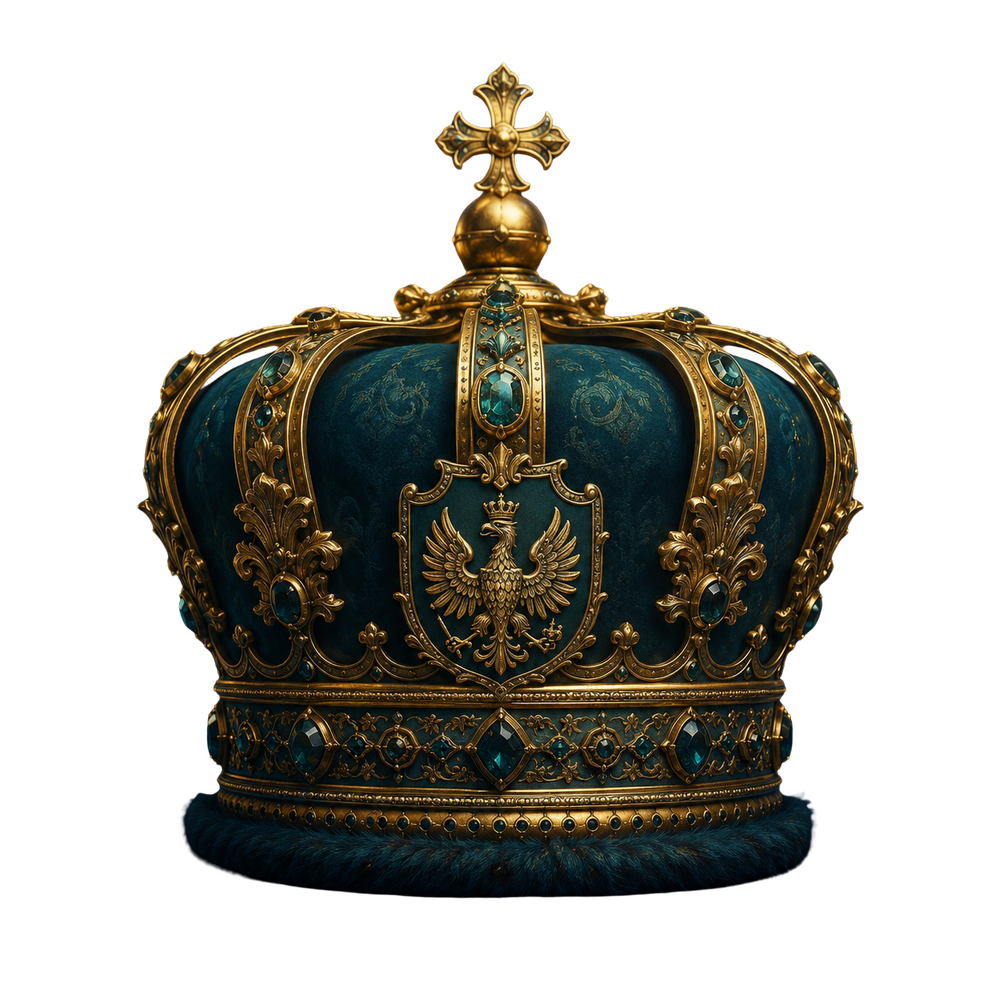
That Reinhold was descended from King Jan III Sobieski of Poland — and that he took a new name so the family could not be found. It is the oldest story the family tells about itself, and the reason a bricklayer's descendants have spent two hundred years wondering whether they are royalty.
2. The Shield
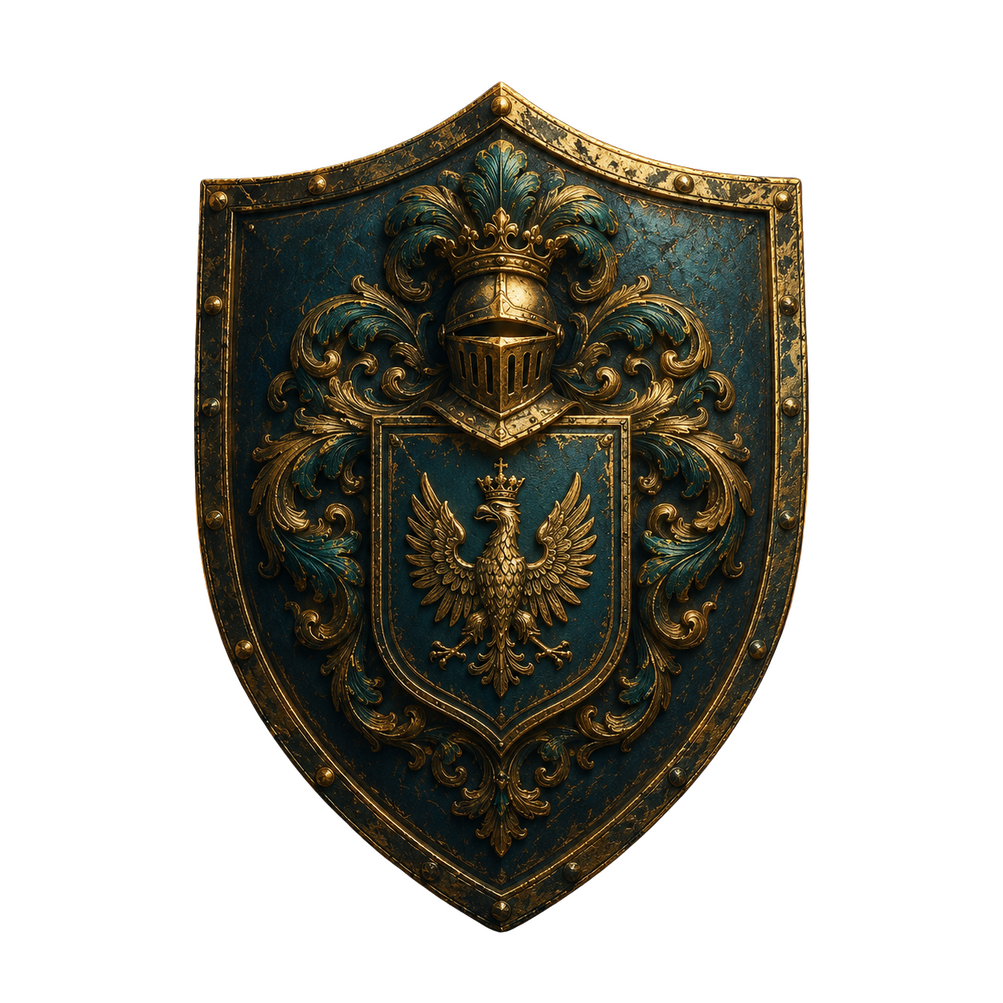
That beneath the crown lies something older still: the Zubrzycki-Kusza — hereditary nobility said to reach back to the Tartar House of Subotai, and the right to bear the Kusza shield, granted, in the telling, in 1495. Inheritance or invention, it is the name Reinhold was born under.
3. The Soldier
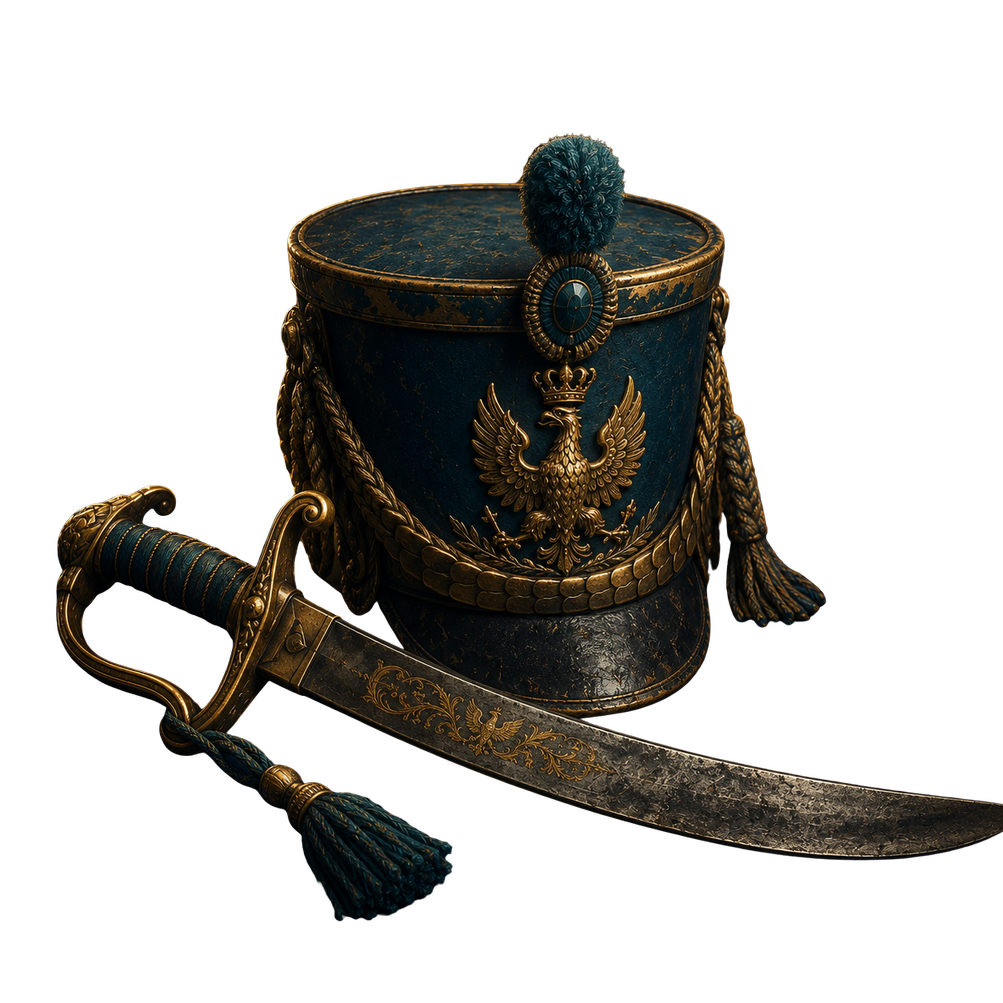
That in 1812 he and his brother marched into Russia with Napoleon's Grande Armée, survived the retreat from Moscow, and could never go home again. He never fully explained the past he had come from — only that he had left it behind, along with the name.
The Reckoning
Stephen Subritzky spent fifteen years chasing these stories, and wrote down what he found with the same honesty as everything else: there is no proof on paper of any crown. What there is, is a christening record from a village church in Subate, dated the 6th of February 1785 — the son of a landowner named Ignatius Zubrzycki, not a prince.
Click here 👇 to view
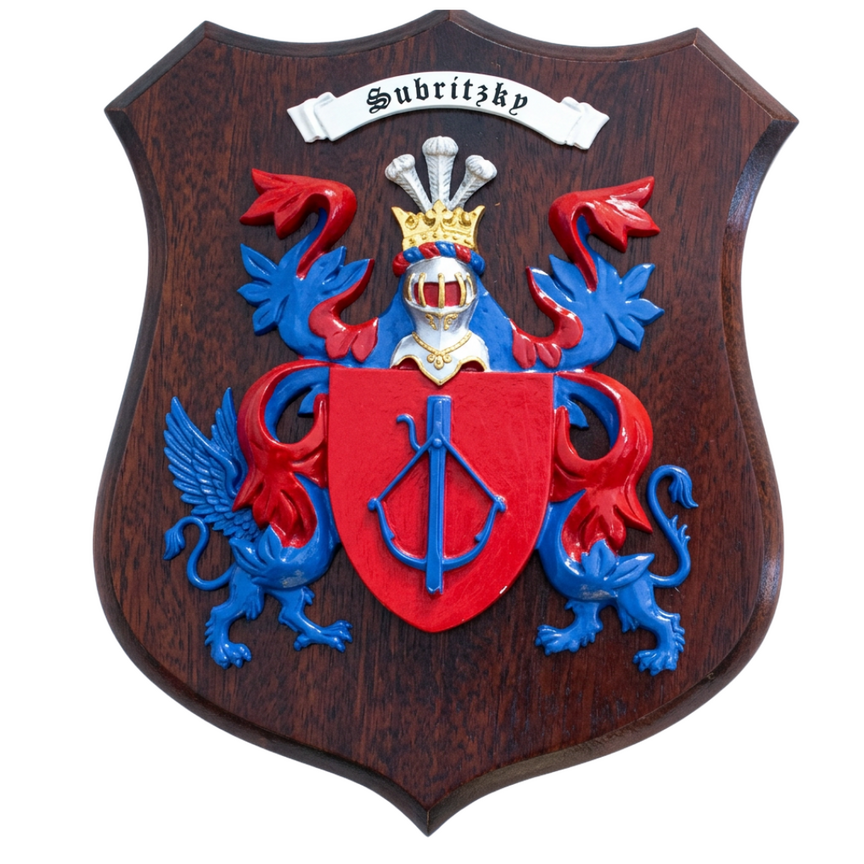
Subritzky Family History from
1785 to 1915
(by Stephen Subritzky)
So why did the legend begin? Nobody knows. And the family has never quite been able to let it go — because as one writer of it put it, where there is smoke, there is fire.
We have kept the stories here, exactly as they were handed down, and we have kept them separate from the record. Both are part of who he was.
His Resting Place
Reinhold was buried at the church of St John in Lüneburg on the 24th of June 1833. The exact place is lost to time — as so many early graves are — but the church still stands, and with it the ground where his story in Germany ended.He never left Europe. Yet everything that came after — Sophie's voyage, the Far North, three families and thousands of descendants — began with him. In that sense, he rests everywhere his name is still carried.
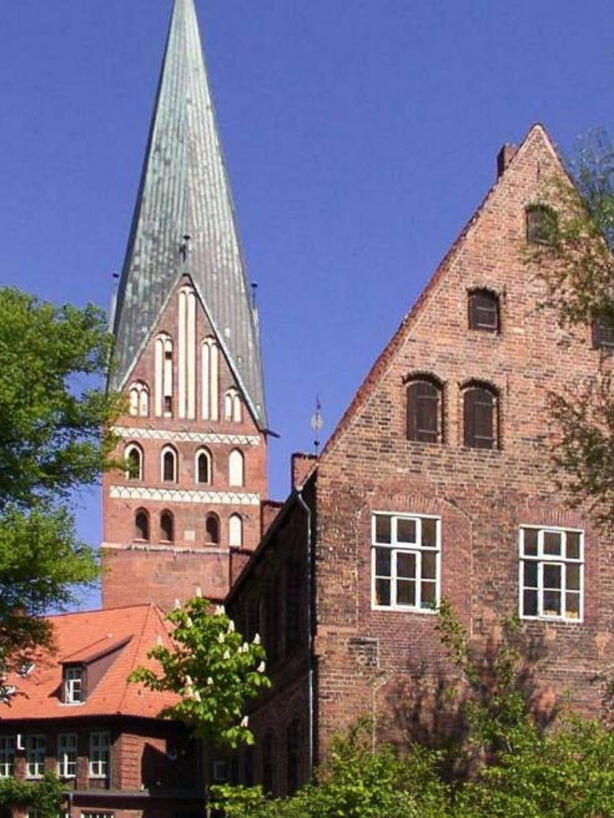
St John's, Lüneburg — where Reinhold was buried, 24 June 1833. 1
Image credits
1. St John's, Lüneburg — by Unscheinbar (own work), via Wikimedia Commons, CC BY-SA 3.0.
Leave a Memory
Every Subritzky alive today carries the name Reinhold created.If that's you — and you've got a story passed down, a photograph, a document, or a correction — this is the place to share it.
His page isn't finished, and it was never meant to be. It's not only ours — it's yours as well. Feel free to reach out.

Share a story, a photo, or an update about Reinhold.
The Maldon Story is a family project. It is not a business, it is not for sale.This page was built from the work of others.
Stephen Subritzky, whose "Subritzky Family History from 1785 to 1915" is the backbone of everything here, and who gave fifteen years to it.Mike Subritzky — "The Subritzky Family Legend", "Golden Book of Subritzky Nobility", "Subritzky Ships".John Anderson, whose "The Wagener's of Maldon, Victoria, Australia" - told in collaboration with sister Marilyn Anderson - traces the Wagener and Subritzky lines back through months of archive research in Maldon and correspondence across two countries.Maria Beniston (née Subritzky) · Alan Wagener · Bev Sharp · Laurel Jonkers (née Quelch) · Jenny Briars and Jenny Leith, "The Road to Sarau" · the Kaitaia Museum and the Alice Evans collection · the Maldon Museum, Victoria.